
Shinjuku, Tokyo, Japan
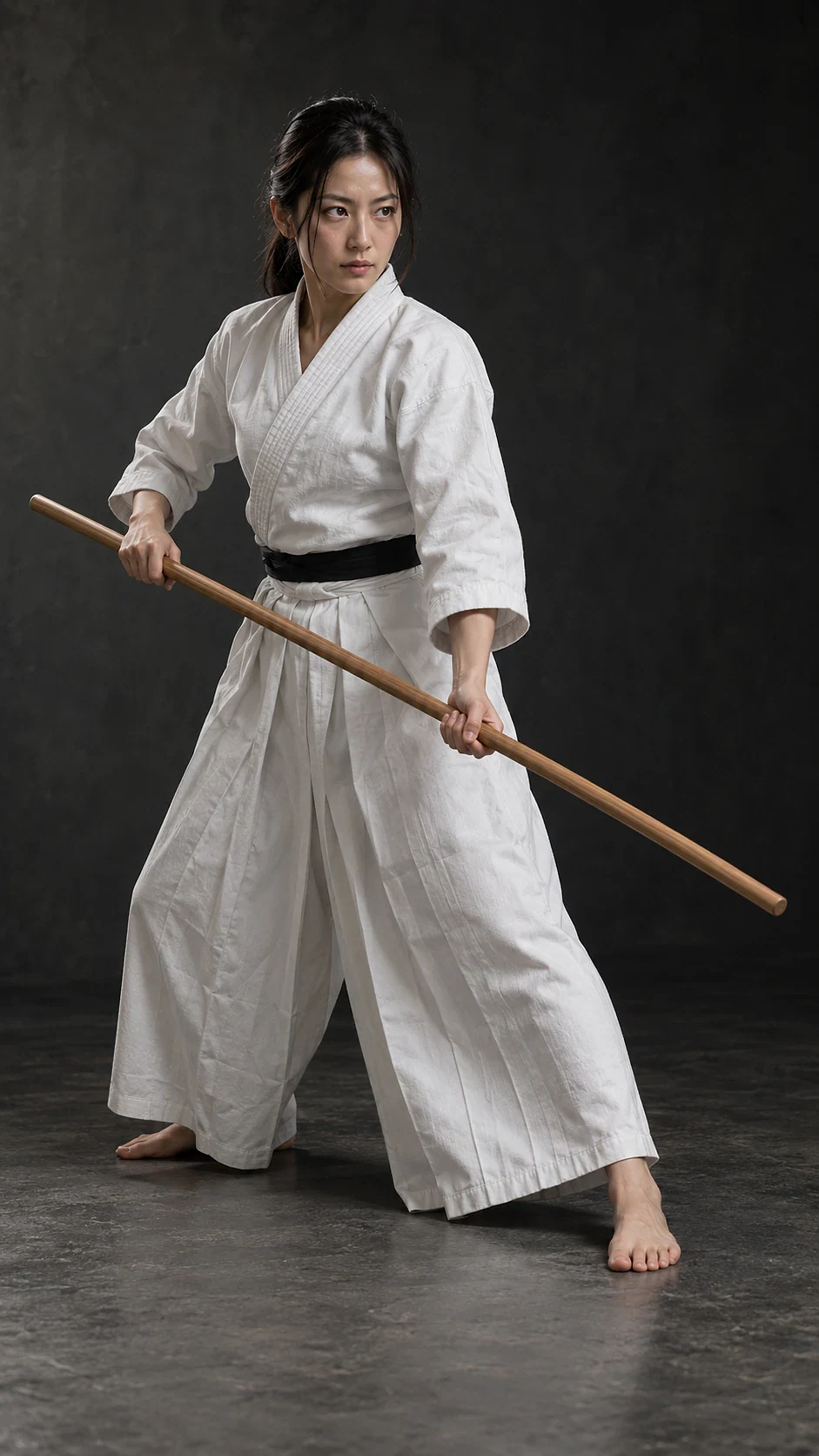
Akari Akiyama
“Come forward.”
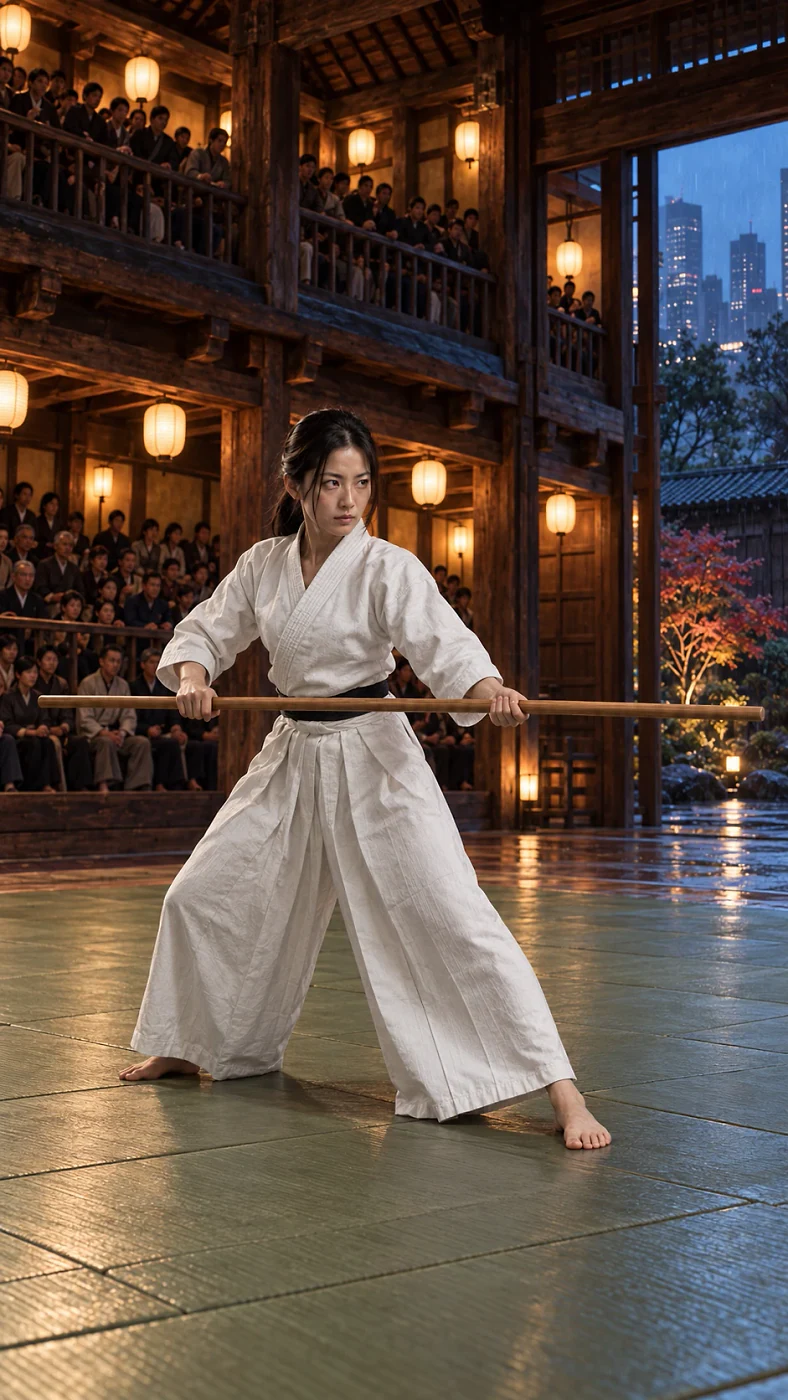
An aikido fighter from Shinjuku, Tokyo, Akari Akiyama carries a plain four-foot staff of white oak and walks forward behind it: thrusts from the hips, overhead strikes, sweeps at the legs, the butt end jabbed in close. When someone gets inside the staff, the aikido arrives and puts them flat on their back. Her power turns force around. The harder an opponent commits, the more she has to work with.
Before the tournament
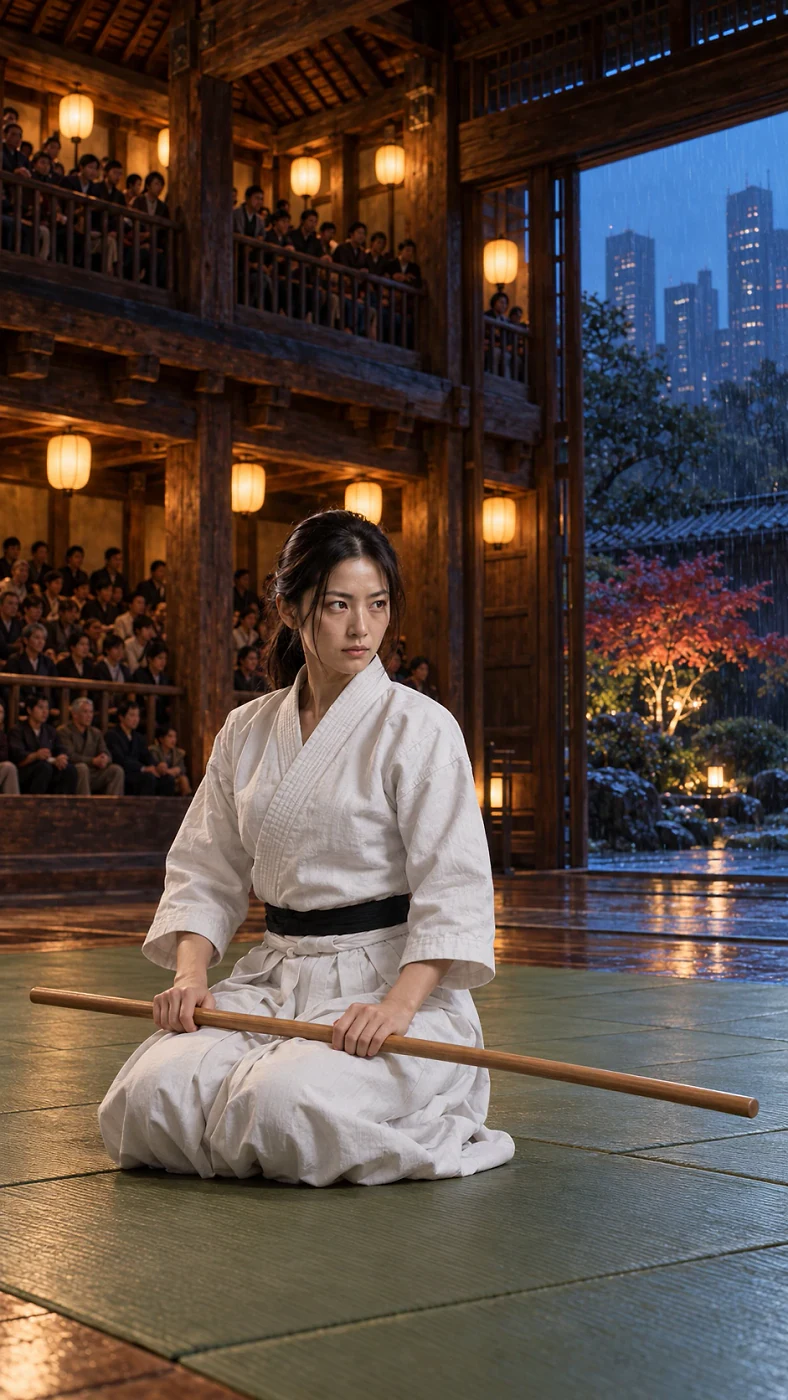
She first entered a dojo at twelve: impatient, easily embarrassed and determined never to look frightened. Her teacher began with falling. For weeks Akari wanted to learn something that looked impressive, and instead learnt how to meet the floor, stand up and try again — and gradually the dojo became the one place where making a mistake did not feel like losing her place in the world. She stayed. As an adult she earns her living repairing wooden doors and interior fittings, fitting her training around early appointments and late finishes, and she teaches the evening classes at The Still House. Her students include office workers, nervous teenagers and older people learning to trust their own balance. She knows who dislikes being grabbed and who needs to succeed once before they will come back.
- Style
- Aikido, with a wooden jō: a plain four-foot staff of white oak
- Power
- Force redirection
- Age
- 35
- Wants
- To prove the art works. Aikido is the martial art the world has decided is not real, something that only functions on a partner who agrees to fall. She is not chasing a title or recognition: she is here so that people watch a defensive art beat somebody with a power, and cannot explain it away.
- Home ground
- The Still House →
Fight
Aruna vs Akari Akiyama
Moves
Signature
KAESHI
Japanese 返し, reversal, return. She steps outside an incoming strike, meets the attacking arm with the jō and turns through one tight circle; a silver arc follows the wood as the opponent's own momentum bends around her and throws them past her shoulder. She needs a committed attack and clean contact, and a feint draws her into turning early.
Second special
KAGAMI
Japanese 鏡, mirror. Against one directed attack she draws a vertical circle with the jō and rolls it forward, sending the attack back along a new path, thinner, dimmer and slower than it came. It never wins a fight: catching it costs her the staff for a beat, and the opening is there for anyone who reads it.
Finisher
MUSUBI
Japanese 結び, knot, joining. She enters close and guides the opponent through three connected turns, and each one puts them on the floor, harder than the last; a silver ribbon hangs around their body after every sweep. On the third the ribbons close into one knot and she holds them there, beaten. Break away before it closes, or knock the planted jō out of line, and it fails.
Portfolio
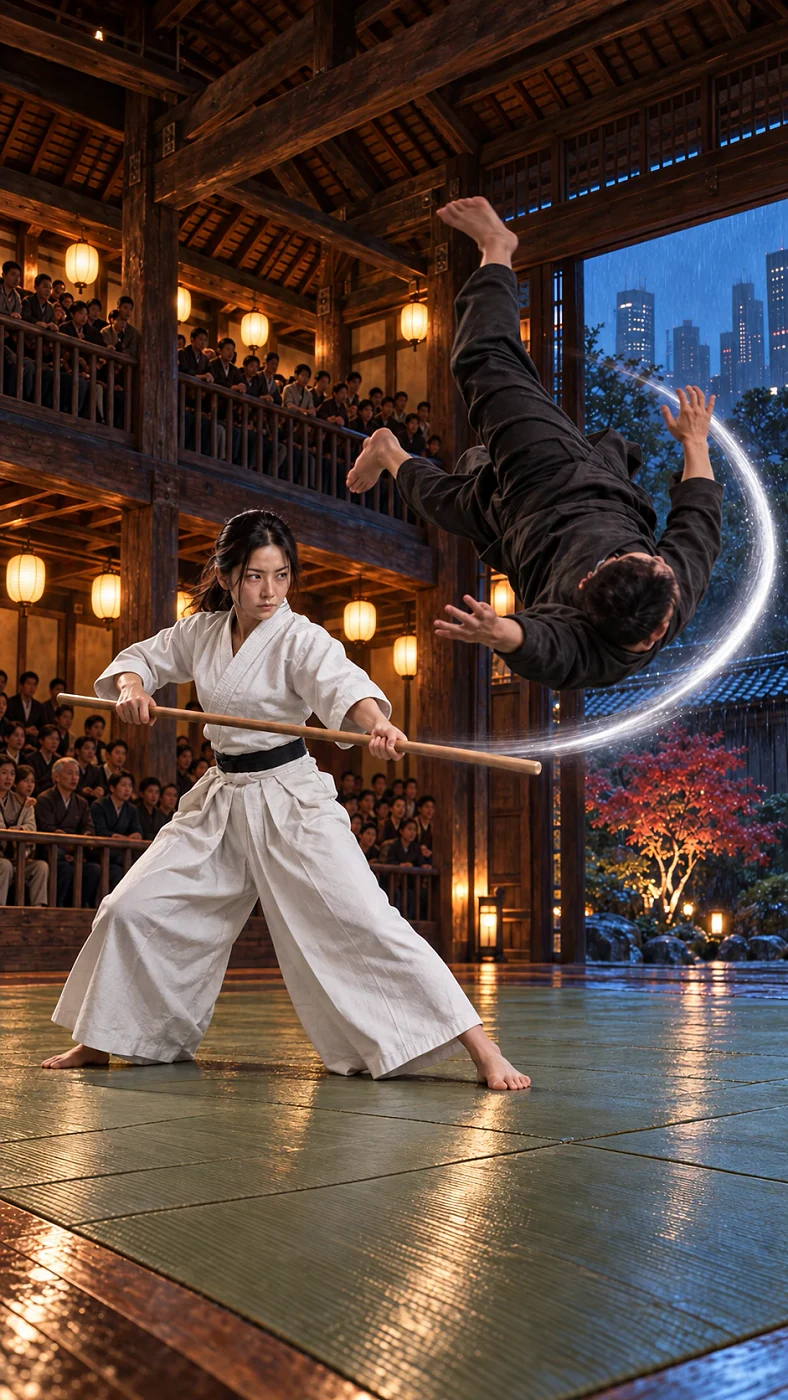 The Still House
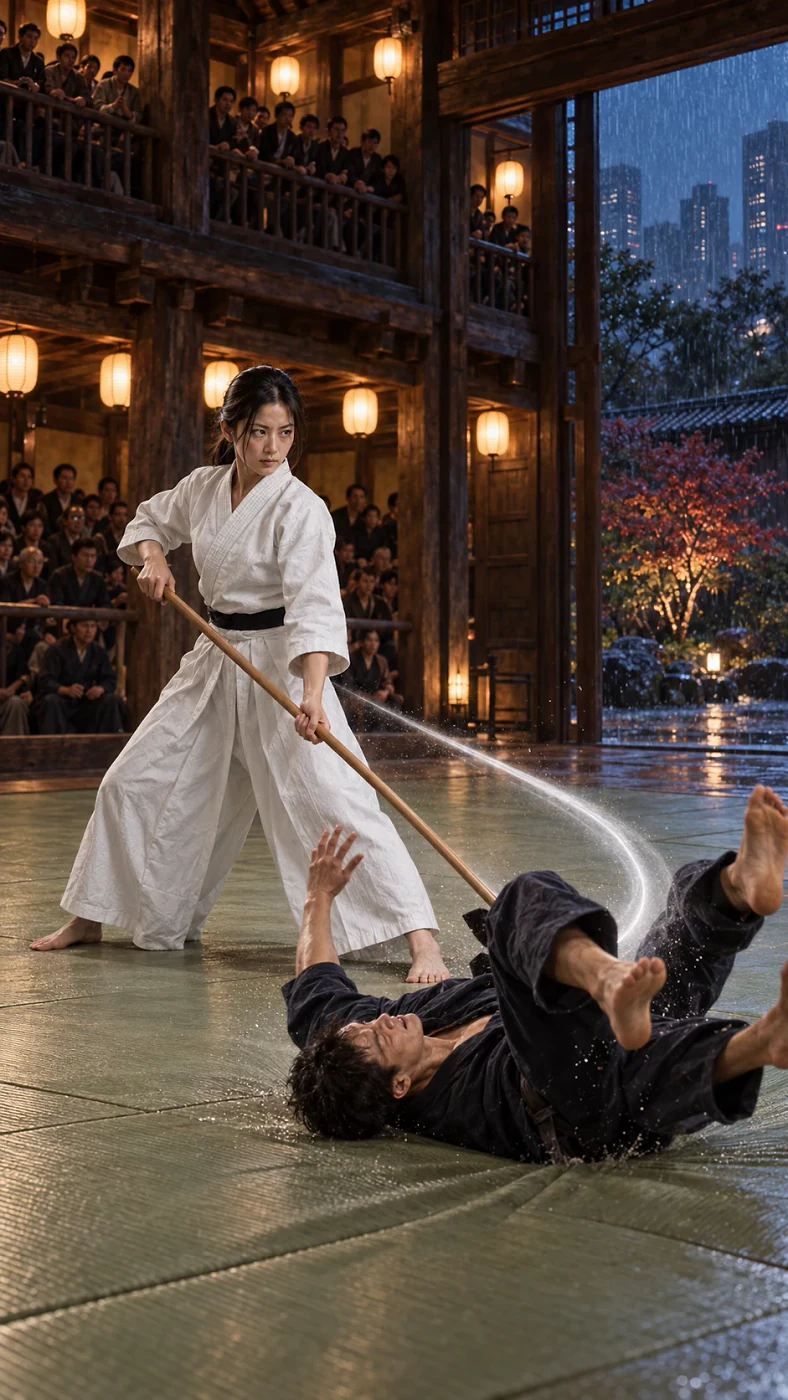 The Still House
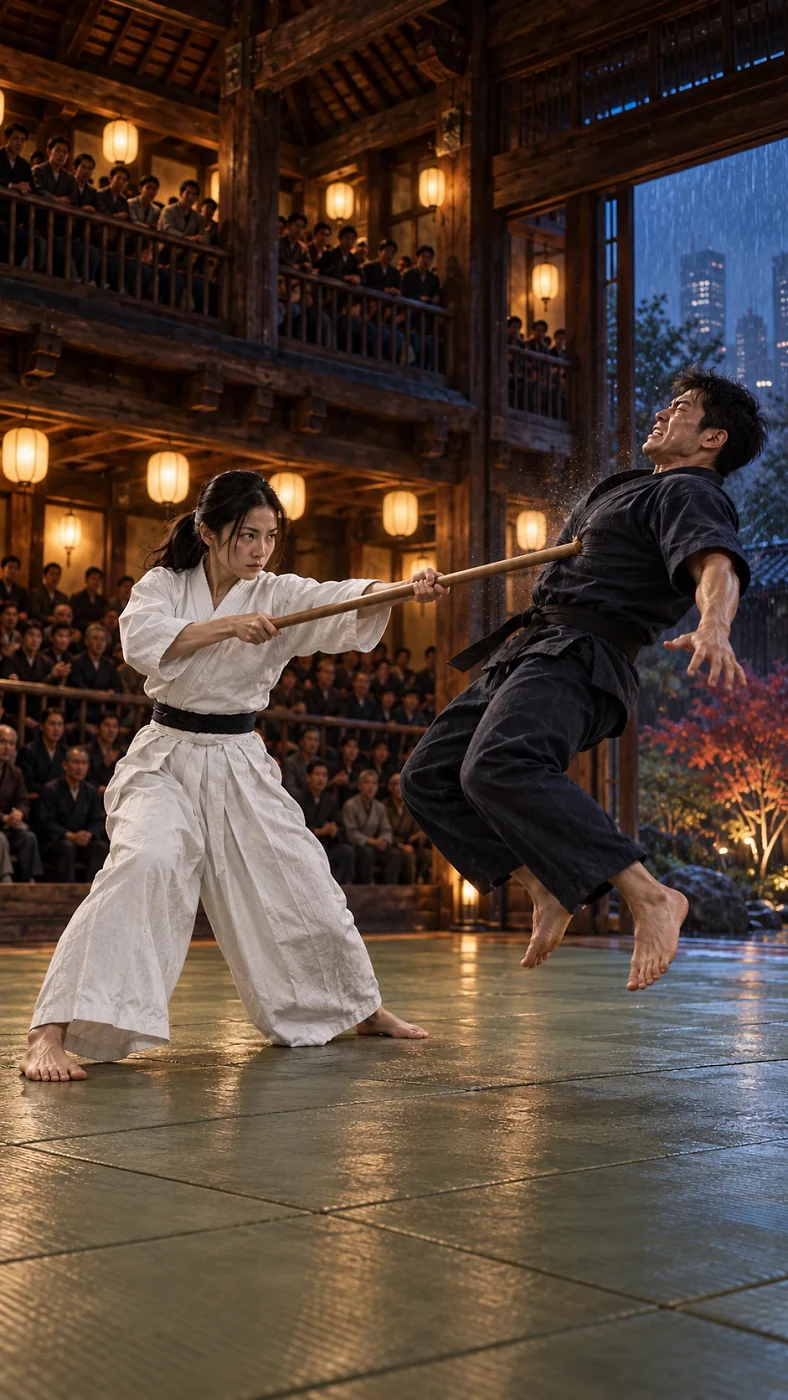 The Still House
 The Still House
 The Still House