Athens, Greece
Nikos Nikolaidis
“Go on. Break it.”
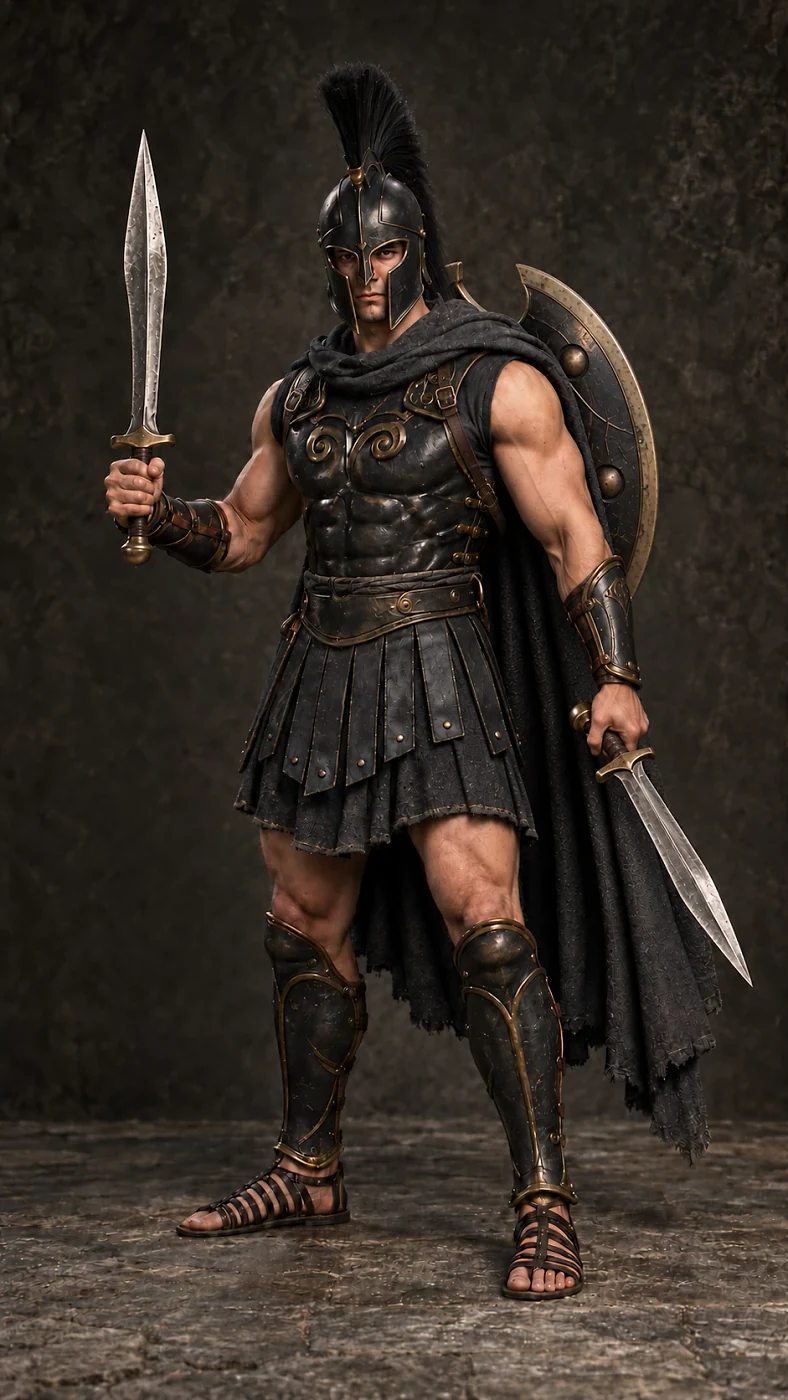
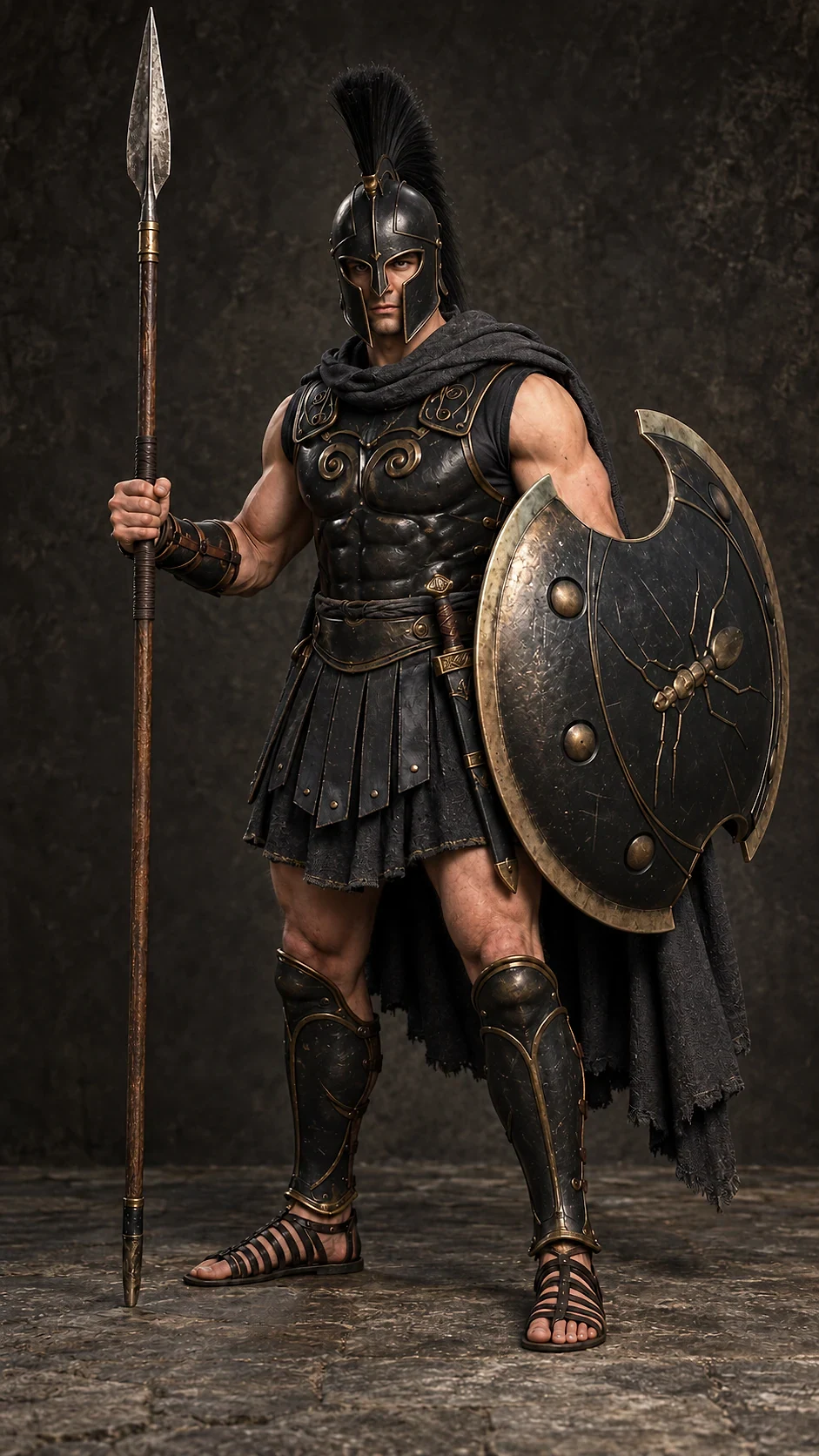
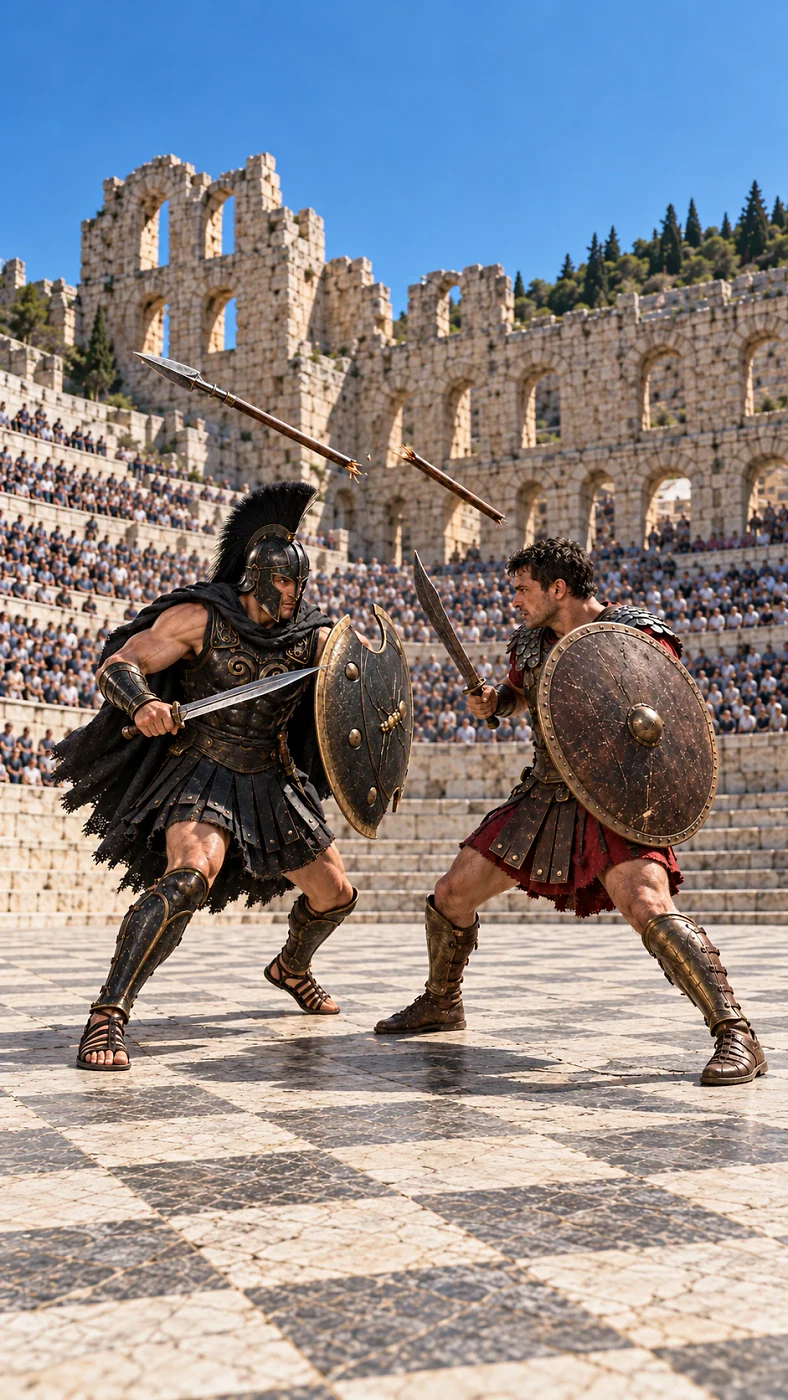
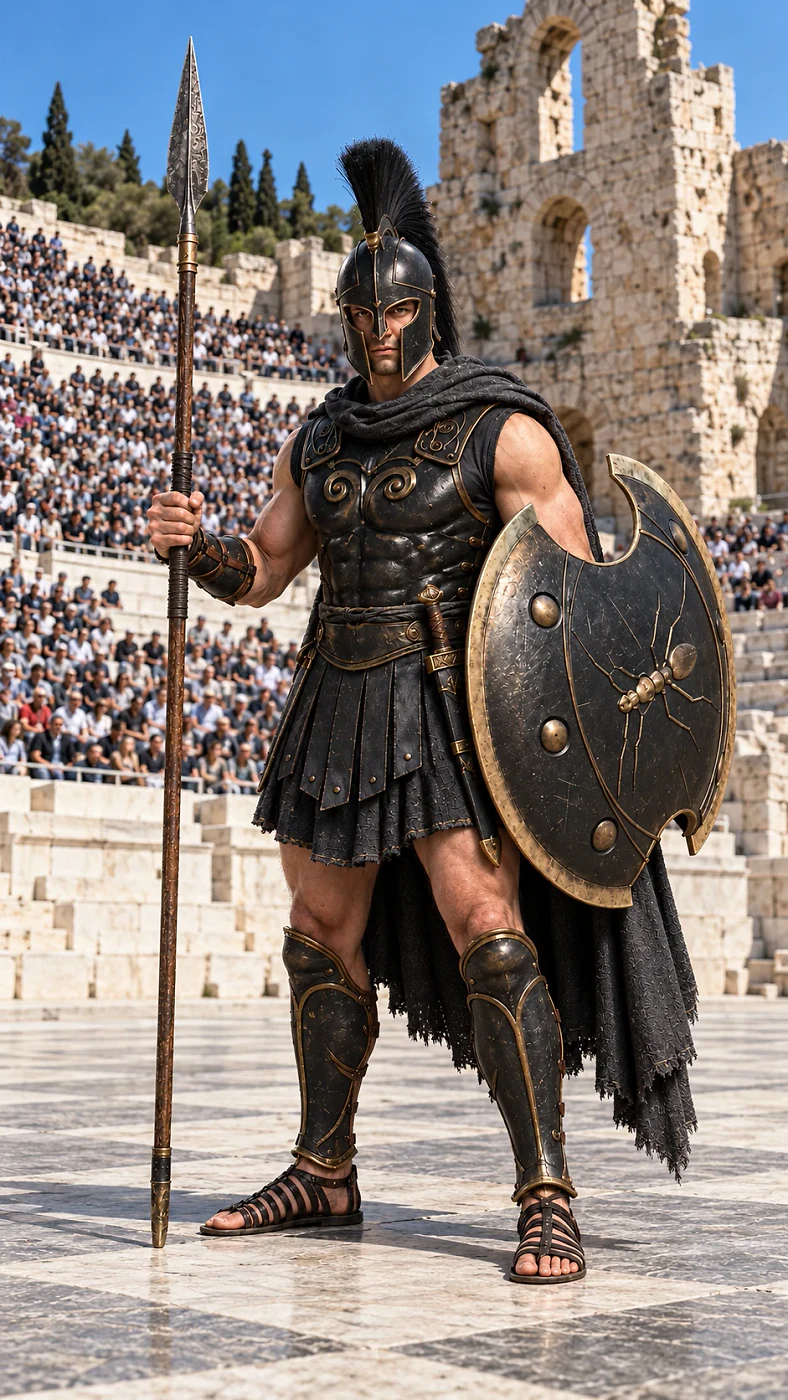
The first Greek on the card, and the only fighter on it who wants distance. Everyone else on the card fights inside arm's reach; Nikos Nikolaidis stands four metres away behind a shield and makes the other one come to him. His power is the quietest in the tournament and the hardest to answer: whatever his spearhead is driven into, it passes through as though the thing were not there. Not armour, not a raised guard, not a blade brought up to block. Nothing glows and nothing marks the spear — the only sign it happened is that something which should have stopped the point did not. It works on the point alone, and only on a committed thrust, which is why he plants his feet to use it and why everything he does is built around earning the half-second that takes. And it lives in the spear rather than in him, so the spear is the answer: break it and the power is gone. He knows that better than anyone he has fought, which is the interesting thing about him. He is at his most dangerous in the moments after he has lost the thing that made him unbeatable.
- Style
- Hoplite — a long ash spear and a round bronze shield, fought at the range the spear gives him, with a short sword kept at the hip for when it does not
- Power
- The point goes through
- Age
- Not yet revealed.
- Wants
- Not yet revealed.
- Home ground
- The Marble →
Fight
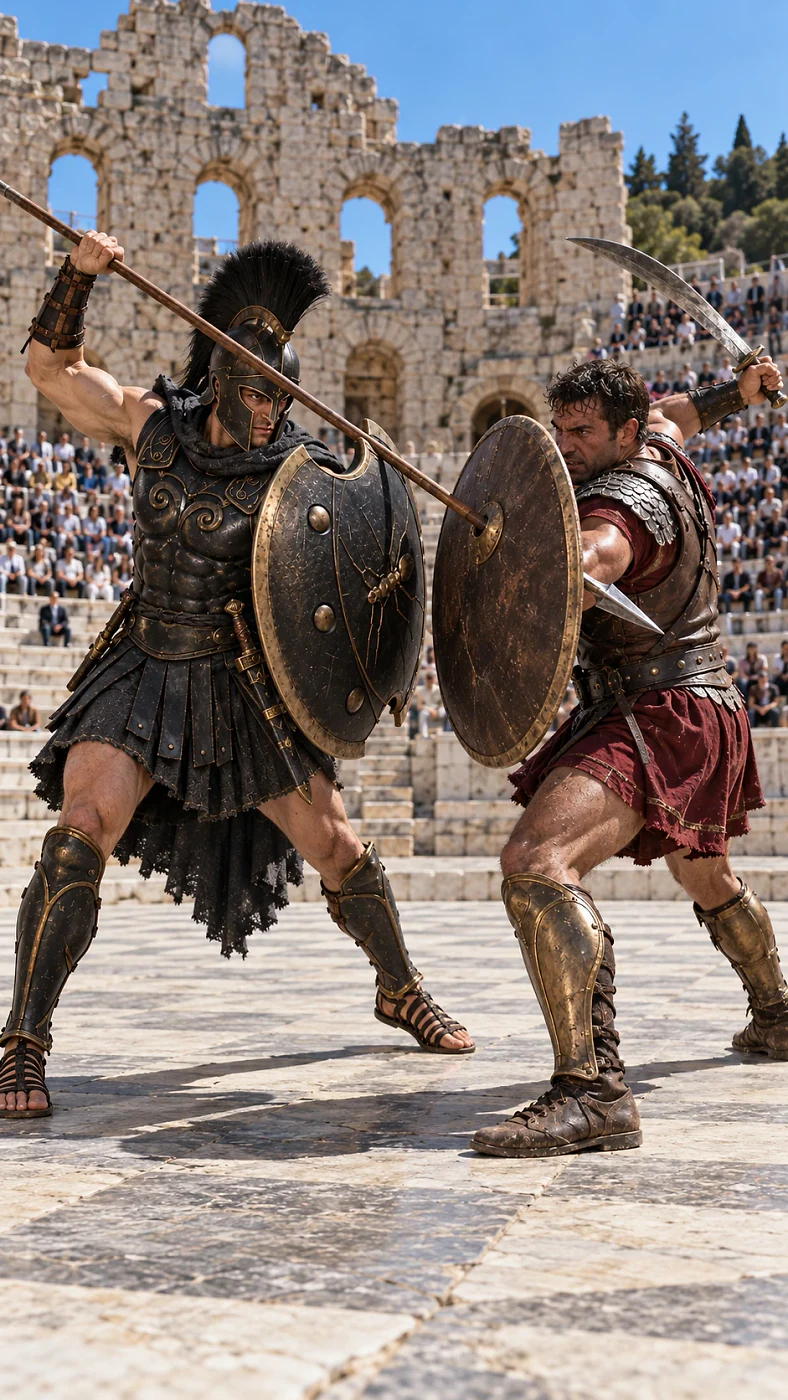
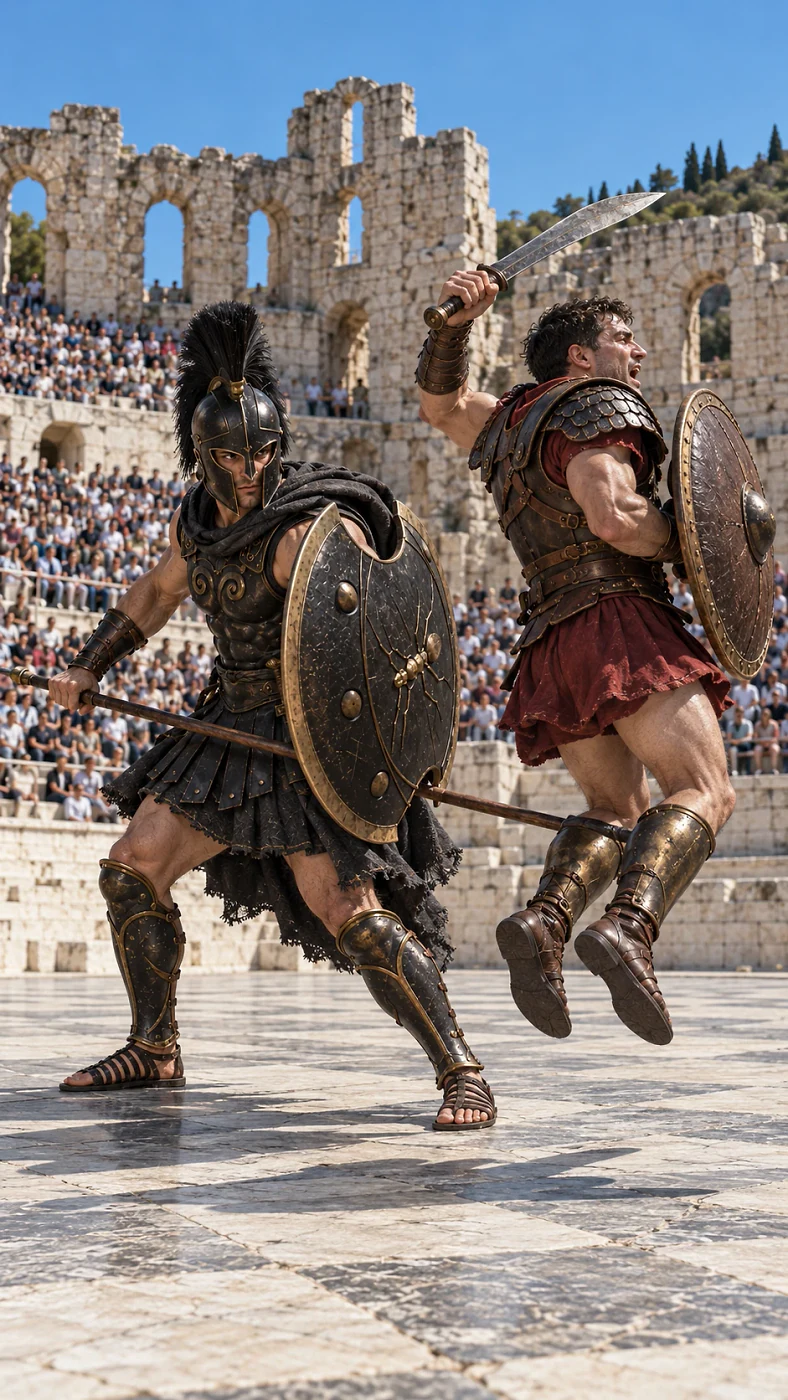
Kana Kodachi vs Nikos Nikolaidis
Moves
Signature
KATAPHORA
Greek καταφορά, a downward onslaught. The spear gripped high and behind the shoulder and brought over the top in a driving arc, the shaft dropped into the single scalloped notch cut in his own shield rim and braced there to push from. It comes down over a guard rather than into one, and the notch is the reason it has weight behind it instead of balance. It is the most recognisable thing he does, and it is pure technique — the power only decides what happens after the point lands.
Second special
STROPHE
Greek στροφή, the turn. He drops the point, turns inside the shield and sweeps with the shaft as a staff, taking the legs or the head with the butt end. The sweep is not powered, and that is exactly why he has it: it is what he does when a thrust has been read, and the only part of his game that does not announce itself a half-second early.
Finisher
THRAUSIS
Greek θραῦσις, the shattering. The spear breaks, and he comes forward with the short sword while the pieces are still in the air. Naming the finisher after the break is the whole point of him: it stops being an accident that happens to him and becomes the thing he was waiting for. He has no power at all while he does it, and he is faster without the spear than with it.
Portfolio
 The Marble
 The Marble
 The Marble
 The Marble