Isfahan, Iran
Siavash Shirazi
“The drum does not stop for a fall.”
The man who kept the count when the old morshed's voice went. The house is still open because he would not let the pit be filled, and he came to the tournament with the key to that door in his boot. The gold showed the winter after his father died: alone in the pit, working the heavy mils, the light came off his shoulders in a shape he did not recognise and could not repeat on purpose. Kamran saw it once, from the door, and told him to keep it off the street. The old word is khvarenah, the royal glory. In the house it is just the light, and it answers when he commits his weight. He does not trust it in a crowd.
Before the tournament
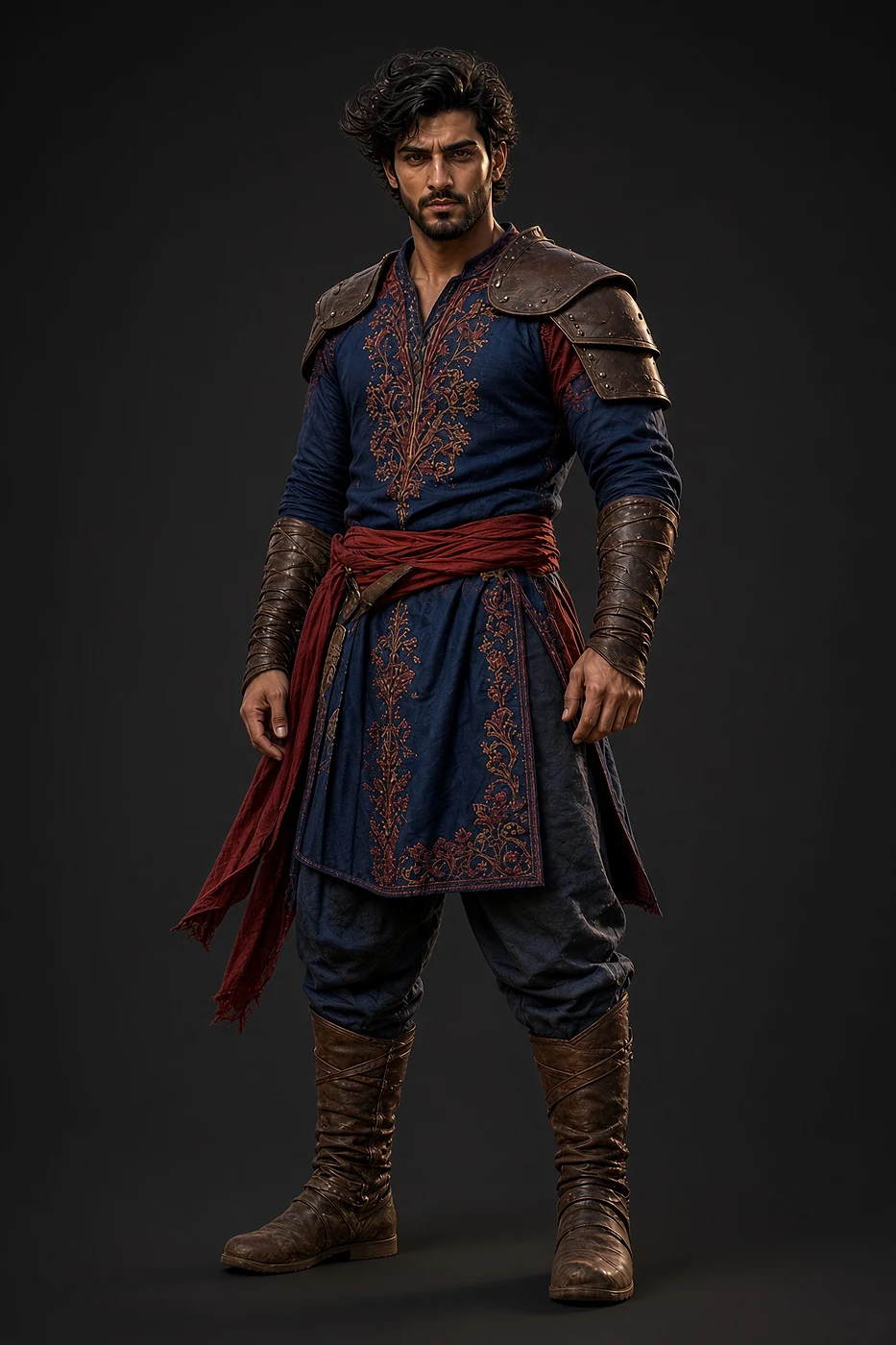
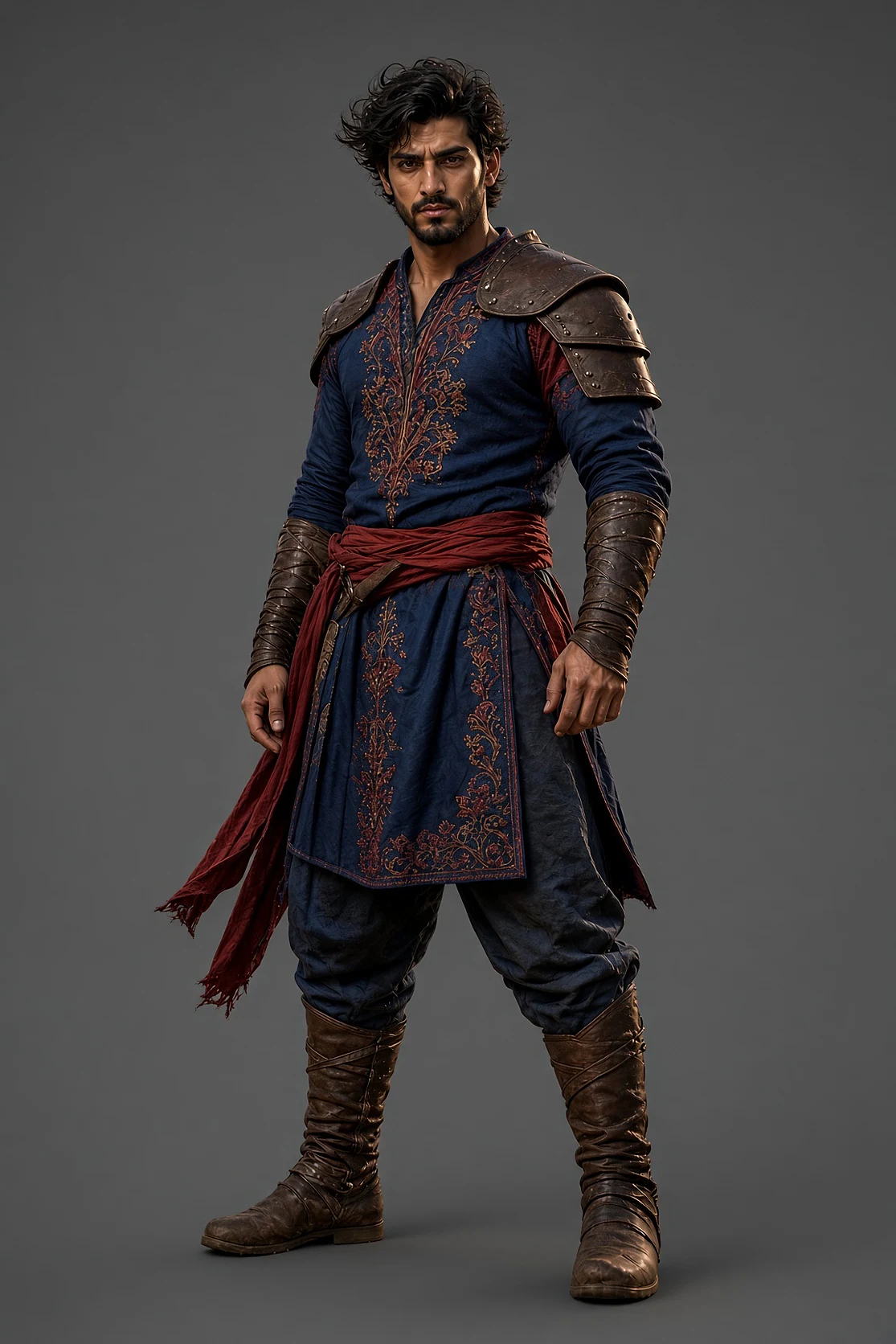
The Shirazi are not from Shiraz: the name stuck to his grandfather, a tile-painter who walked up from the south and never corrected anyone in the bazaar. Siavash grew up in a courtyard house off Naqsh-e Jahan, three rooms and a fig tree, glue and cobalt from his father's bench in the morning and cardamom from his mother's stall by late afternoon. His father, Reza, restored the cut-tile panels on the mosque arcades and died on a scaffold at forty-six, when Siavash was nineteen, on a board the contractor had signed off as sound. His mother, Farideh, kept the stall, and still tells him to eat before he trains. His sister, Leila, twenty-three, draws elevations now; she is the one who writes to him, and the one who found the filing. The zurkhaneh was his uncle Kamran's, and Kamran had no sons. He put Siavash in the pit at twelve, not as a favour, as a pair of hands: the mils, the kabadeh, the push-ups on the wooden boards while the morshed struck the drum and called the Shahnameh. Siavash was not the strongest boy. He was the one who did not drop the count. When Kamran's knees went, Siavash took the early session, then the evening one, and men who had trained there for forty years started calling him pahlevan without smiling when they said it. He hated the word. It made the room go quiet. Now a cousin in Tehran holds papers on the building that are clean enough to scare a lawyer, and the plan is to cap the pit, let the drum room, and put a café on the boards where the men bow. Kamran will not beg. Farideh told him not to spend the stall on a fight he could not win in an office. His grandfather's shamshir hangs on Kamran's wall, and it stays there: his hands are the thing he actually trained.
- Style
- Zurkhaneh, koshti wrestling, open hand
- Power
- Khvarenah, the royal glory
- Age
- 29
- Wants
- The pit kept open, and the drum still struck after Kamran is gone. The purse is the means: the only number that makes the cousin in Tehran pick up the phone. Being seen matters less to him than it does to the room.
- Home ground
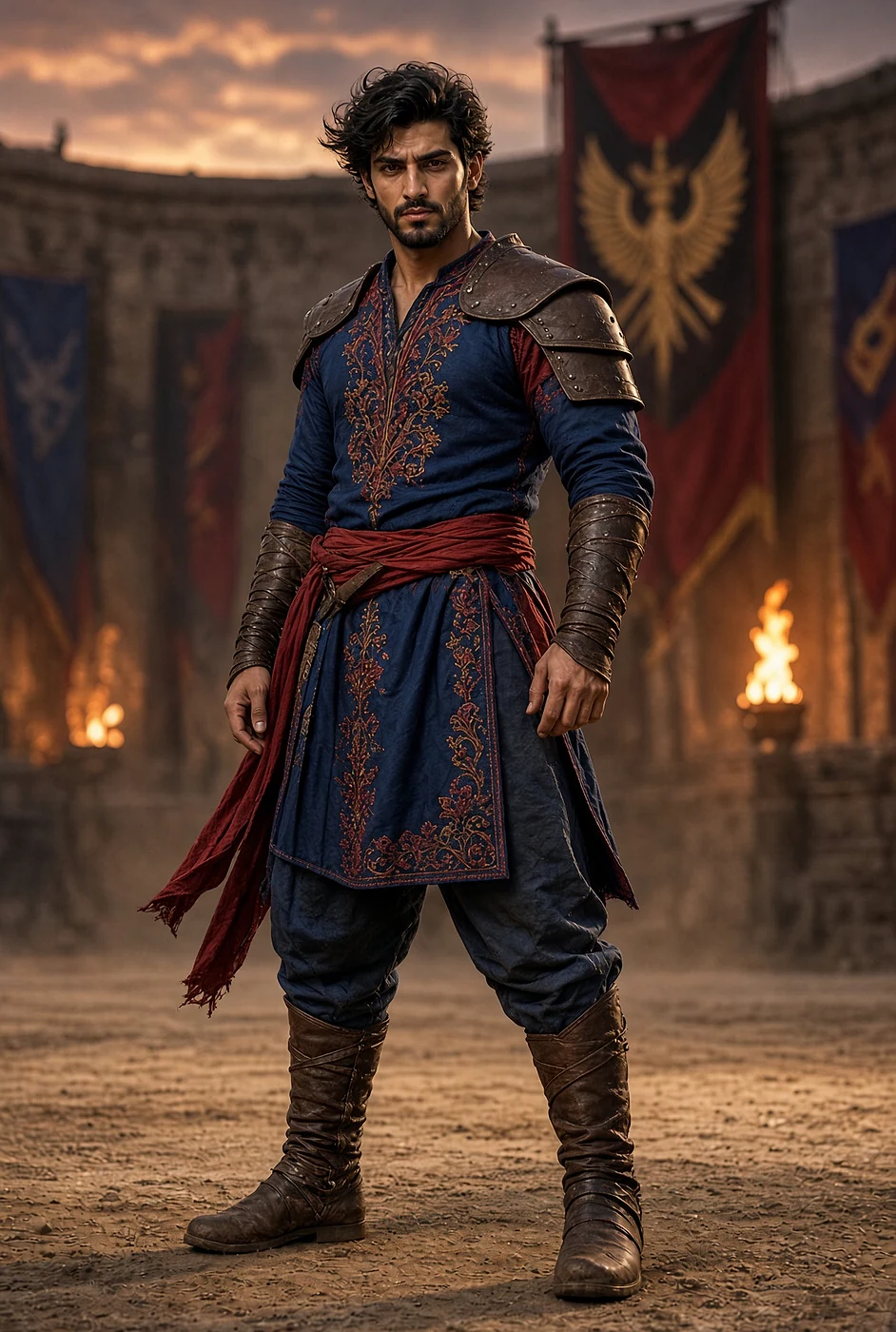
- The Meydan →
Fight
Siavash Shirazi vs Tatsuya Takeda
Moves
Signature
SHIR
Persian, the lion. A planted step and an open-hand strike that throws a lion-shaped shock of gold light. He shouts it. The shout is the only part he learned on purpose; the shape arrived on its own.
Second special
MIL
The zurkhaneh club, done empty-handed. A spinning shoulder and elbow that stays inside range when SHIR needs distance. No light, or only a scrape of it: this is the work he did before anyone was watching.
Finisher
FARRAH
The glory itself. Not the same strike: a run of body blows, then he drops his weight and the gold comes down as a column on the last hit, not out from it. He does not shout this one. The drum in his head is enough, and he hates that he can hear it.
Portfolio
 The Meydan
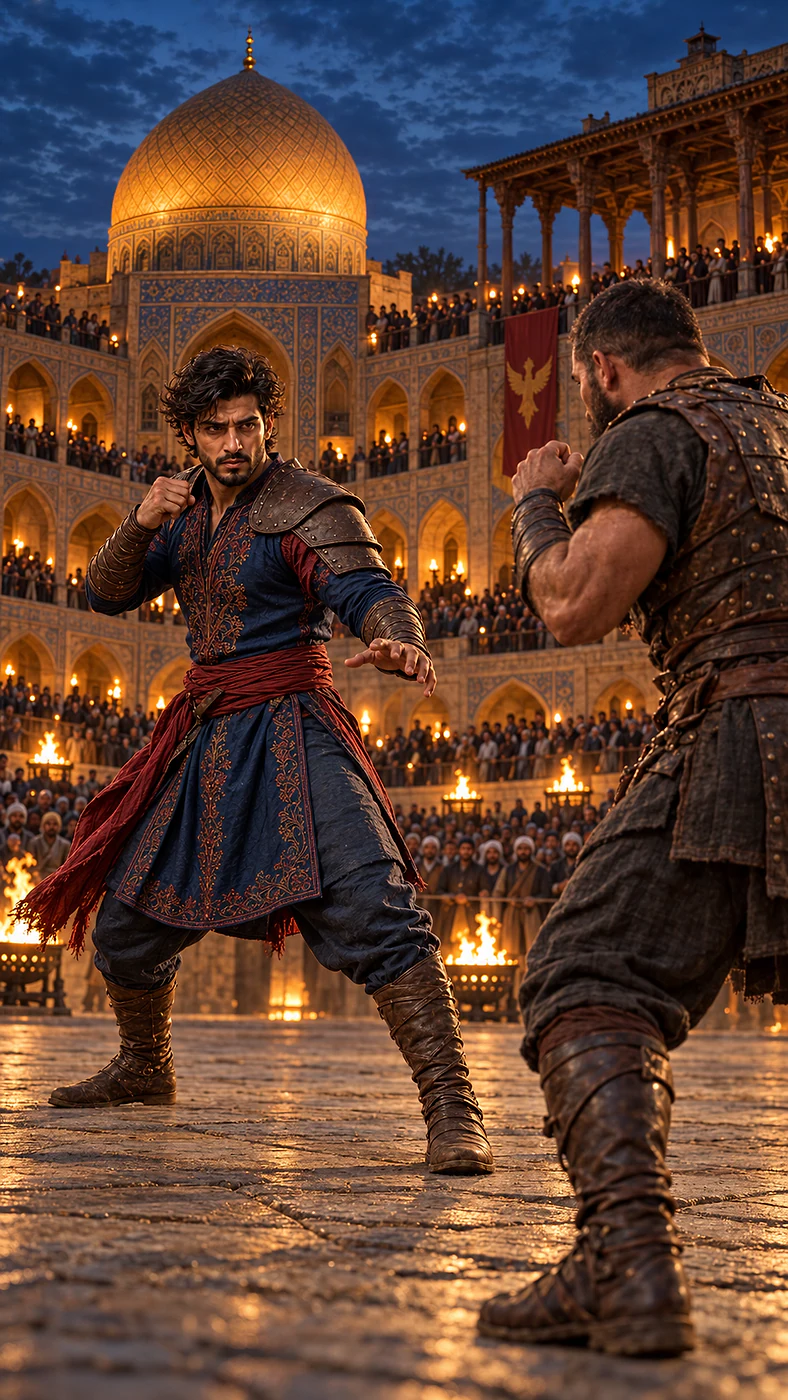 The Meydan